Archive Page 6

What we’re up to…

Hi Everyone,

We’re in the process of revamping our main website (rinconvitova.com), finishing our most recent Catalog of Beneficials, and getting ready for 2009 busy season!  Once we have all this together (whew) we’ll start getting some more posts up.  We have a lot of exciting ideas to share…  Thanks so much for checking us our and we look forwards to providing more biocontrol content asap!

The Bugfarm

Talking IPM with Andy Force at the Foellinger-Freimann Botanical Conservatory

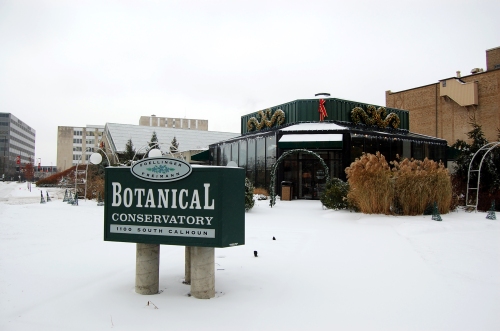
 View of the Botanical Gardens from W Jefferson Blvd, Ft. Wayne, IN
While I was at home in Fort Wayne, Indiana, visiting my family for the holidays, I visited with Andy Force, the Supervisor of Horticulture for the Foellinger-Freimann Botanical Conservatory. The conservatory consists of three indoor gardens and showcases over 500 species of plants and 72 types of cacti. A Jaboticaba tree, native to South Brazil, is one of the oldest plants in the conservatory, and has been growing since the gardens opened in 1983.
Andy has been working with the conservatory since 1989, when this Staghorn fern was roughly the size of a basketball.
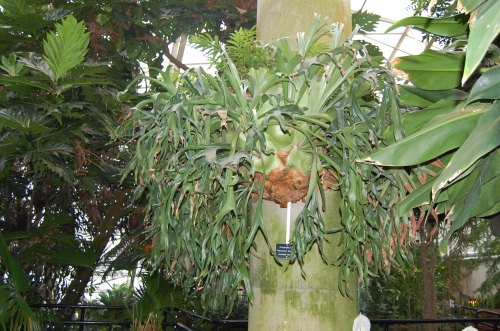


Staghorn Fern

Staghorn Fern

 Back in those days, the pest control was accomplished with chemicals, and once a week they would bring in the machines and spray everything. Andy noticed that spraying did help to reduce the pest populations, but only temporarily. In 1991 he started using beneficial insects, and has been fine-tuning his program ever since. “One of the great things about the beneficial insects, that I keep telling people, is that the beneficial insects usually find the problems that we have before we know we have them. We’ve come out here and seen there are mealybugs here and we looked at it and found Cryptolaemus already on the plant working on it. So a lot of the time we don’t need to do anything except watch.”
 

Andy notices that the south side of the rooms in the conservatory get the most pest problems, and it is there that he does the most releases of beneficial insects. “The bananas, normally mealybugs like, but they tend to leave them alone. I bet if they were on that [the south] side of the house, they would get more mealybugs.” Since Andy has been working with an IPM program since 1991, he has an excellent handle on what pest problems his plants get, as well as when to expect them. The Ficus tree gets a lot of thrips, for which he periodically releases Atheta coriaria, Amblyseius cucumeris, and Orius insidiosus. Also, Andy has seen that the thrips are attracted to the light coming in through the exit door so he’ll open the door and shoo the thrips outside, as another control strategy. The Butterfly Palm frequently gets a scale infestation, and receives many of the Lindorus lopanthae beetles sent to the conservatory. Andy uses the Encarsia formosa cards on the Hibiscus to help combat the whitefly problems, and in the spring, the cacti bloom and typically get spider mites, which he controls with releases of the predatory mite, Phytoseiulus persimilis.
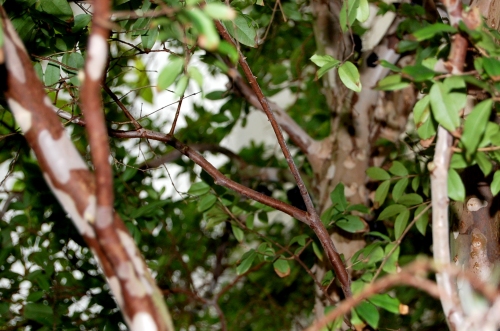
This Jaboticaba tree has been growing in the conservatory since 1983. As the tree matures, the bark peels and takes on a look similar to camouflage.

This Jaboticaba tree has been growing in the conservatory since 1983. As the tree matures, the bark peels and takes on a look similar to camouflage.


In my opinion, Andy exemplifies how one should approach biological control. He is very familiar with the plants in the collection and the typical challenges that are associated with each. Not only is he observant of the pests and natural enemies that help control them, but he is also patient with the level of control that is achieved naturally. Andy understands that biological control is not total eradication of a pest problem, but rather, suppression of a pest to a level such that the pest is in balance with the natural enemies present, and that the damage is not devastating to the plant. Further, Andy embraces the idea that for biological control to be effective releases need to be proactive, not reactive. Every year before spring, Andy sets up advance orders to ship monthly for the duration of the year. Andy knows when to expect certain pests, and releases the beneficials in anticipation of these outbreaks, which allows the beneficial insects to establish themselves in the conservatory and seek out the pest problems, often even before they are apparent. 


Stay tuned to learn about the Foellinger-Freimann Botanical Conservatory’s involvement with CITES and the exciting story that Andy Force shared with me about illegally smuggled orchids.

Fungus Gnats Neutralized

Gnatrol is a microbial insecticide that attacks the maggots of fungus gnats, shore flies, and other flies in the soil. The active ingredient Bacillus thuringiensis israelensis (Bti) bacteria doesn’t kill the flying adults; the maggots must eat it. Hydroponic growers like Gnatrol’s cost-effective control of fungus gnats. Gnatrol WDG (water dispersible granules) is OMRI listed for organic, and pending CA EPA approval. The liquid comes in 2.5 gallon jugs and the graunles in 16 lb pails.

For more info, check out our Gnatrol bulletin.

This product article originally appeared in our Biocontrol Beat Winter 2008.

Everett J. “Deke” Dietrick 1920 – 2008

Everett "Deke" Dietrick

Everett "Deke" Dietrick

Our founding entomologist Everett “Deke” Dietrick died on December 23 at age 88. For over 40 years he mentored many who went on to build successful careers and businesses promoting biocontrol and sustainable agriculture. He did biocontrol research for the University of California, quit when the funding ran out (with a family of five small children including me), and began selling advice as well as growing and selling good bugs. He pioneered both the practice of ecologically based pest management and the insectary industry helping people at all stages on the path away from CCC (conventional chemical control) towards BC by NE (biological control by natural enemies).

Sometimes called the “Father of Commercial Biocontrol”, Deke inspired field advisors to identify markets and insectary teams working for Rincon-Vitova Insectaries, Inc. to innovate mass production systems for beneficials. The goal was often to jumpstart the predators and parasites on vulnerable farms in transition and sometimes to combat a key pest. However, in many situations the main value of the beneficials was to keep farmers from killing them with pesticides. By including releases with monitoring and forecasting, he helped many farmers in over 50 crops in many countries get off of the ‘pesticide treadmill’. He helped entrepreneurs to sell biocontrol in Central America and the Mexican government to establish its network of insectaries. How his work inspired the development of the Soviet biofactories in the Amu-Darya cotton belt is a story in itself. He started D-Vac Company as a separate break-even family business to provide an international scientific standard for sampling arthropods and a tool for applied insect ecologists.

Highly regarded not just by biocontrol researchers and a counter-culture movement of farmers rediscovering organic methods, he was also honored by professionals in the Association of Applied IPM Ecologists that he helped found, and by business people in the Association of Natural Bio-Control Producers. The latter serves the industry that Deke encouraged through decades of sharing of insights and encouragement and watching employees learn, leave and start their own businesses. The insectary business was an economically independent outlet for demonstrating the value of biocontrol. Dietrick saw the Fillmore Insectary, a regional cooperative, as a more sustainable model for providing biocontrol resources to farmers.

Deke sweeping for insects 1993

Deke sweep sampling to monitor beneficial and pest insect populations, 1993

_
Unlike Robert van den Bosch who published an exposé The Pesticide Conspiracy and Don Dahlston who spoke at public hearings against the malathion bait sprays for Medfly, Dietrick kept a lower profile, concerned about risking an attack on the business. He did spend hours with activists, teaching them enough to ask penetrating questions and speak out. “They were burning the books on biocontrol” was his description of the powerful influence of the pesticide industry. He said that he did what he did because there was nobody else who could do it. He also maintained that he only did things that were fun. Deke’s memoirs (to be published) tell about the mentors who prepared him for this role and the challenges he faced. More by and about him is available at dietrick obituary at rinconvitova.com.

Wearing his trademark white canvas hat shading his twinkling eyes, he was a familiar figure at the Ventura Farmer’s Market and was appreciated by so many around town for his engaging spirit. Contributions in his memory can be sent to the Dietrick Institute for Applied Insect Ecology, PO Box 2506, Ventura, CA 93002 to help edit videos of him teaching in the field. A 501c3 non-profit organization, the institute http://www.dietrick.org offers training in ecologically based pest management in recognition of what a legend he is within our field.

Enhancing Farms and Gardens with Insecta-Flora Low

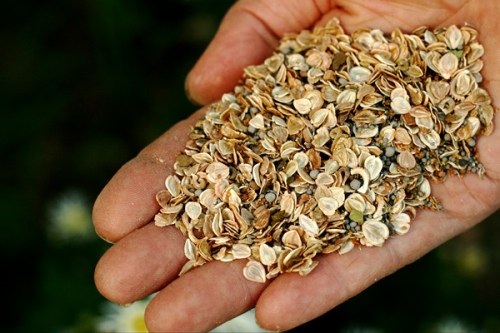
A handful of Insecta-Flora can help to attrach beneficial insects.

A handful of Insecta-Flora can help to attrach beneficial insects

Insecta-Flora is a flower seed blend that blooms through the seasons and years providing habitat for beneficial insects. Clovers and alfalfa are great habitat plants, but sometimes the showy look of Insecta-Flora containing less grass and legumes is preferred to the ever-popular and less expensive Beneficial Blend. Insecta Flora comes in Low (up to a foot high), Standard, and High (3 foot high). The Low mix provides nitrogen-fixing and erosion control as well as habitat.

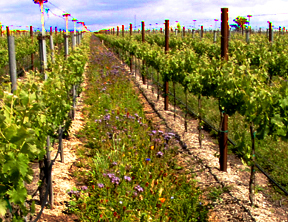
Insecta-Flora as a vineyard covercrop in California.

Insecta-Flora as a vineyard covercrop in California.

Smaller beneficial insects will fly a couple hundred feet to an island of flowers that keep them going. Enhancing an upwind vineyard border yields a beneficial welcoming committee for invading pests. Covering bare ground with beneficial habitat mixes cuts heat reflection and dust to prevent spider mite problems. Mow or weed-whip half at a time and then the other half a few weeks later to concentrate the beneficials without driving them away. Wait until the flowers set to encourage reseeding.

Visit our Beneficial Materials Catalog at rinconvitova.com for more information.

You can also download our Insecta-Flora Bulletin as a PDF.


This article originally appeared in our Biocontrol Beat Winter 2008 Newetter.


Categories

Archives


Design a site like this with WordPress.com
Get started