Archive for the 'RVI' Category


Spotlight: Hurricane Ike Visits Shangri La

Recently Kyra was catching up with Jennifer Buckner, Epiphyte Specialist at Shangri La Botanical Gardens and Nature Center on the Texas Gulf Coast (in Orange), after September’s Hurricane Ike. Jennifer explained that preparing for evacuation is very different depending on if a storm is going to bring more wind or more water. The high winds of Hurricane Rita three years ago ripped the roofs off the greenhouses and exposed precious orchids to damaging exposure to the sun. Some have still not recovered. So it was decided to put the plants under the benches to be out of the sun until the staff could get back in.

Holly Hanson, Volunteer Coordinator (and plant caregiver) explains how gut-wrenching it was to drive away. “You don’t know if what’s been done was the best way to protect the plants.” Unfortunately Ike brought water rather than wind, so many precious plants got soaked under the benches and most of the greenhouses are still full of water. She said the staff has been kind of depressed, but sees some benefits from the rebuilding and is celebrating with a Greenhouse Open House on the Saturday before Thanksgiving.

The educational non-profit is faced with massive rebuilding. Not just a leader in ecological pest management, Shangri La was the first project in Texas to achieve LEED Platinum certification! Gary Outenreath, Director of Horticulture, has long been a leader in promoting safe and sustainable pest control, making sure visitors know that no toxic chemicals are used at the facility.

Rincon-Vitova’s Roots

I’m glad we’re setting up a blog for Rincon-Vitova Insectaries, Inc., sharing what we have learned about biological pest control. I want to launch with a post about my dad, Everett J. “Deke” Dietrick, and the circumstances that led him to go into this business.

Entomology had long been the study of dead insects and ways to kill them. During the 1950’s, pesticide companies controlled most research about pest control and researchers were (and often still are) rewarded for playing with statistics to prove that biological insect control doesn’t work well enough. In Deke’s words, “They were burning the books.”

By 1960, Deke had learned enough working on some extensive biocontrol field surveys at the University of California. Seeing no honest biocontrol projects left to work on, he quit. Instead of continuing in the research work, Deke started developing mass-production methods for beneficial insects. He soon was on call for farmers and customers, putting their doubts about predators and parasites to rest. He called himself a “free-enterpriser.”

Rincon-Vitova was always out there, promoting non-chemical methods while every other organization tried to suppress the same knowledge in order to survive. My father said, “You couldn’t get it anywhere else” referring to the field observations and successful experiences of Rincon-Vitova’s pioneering “supervised control” consultants.

Following his inspiration and his open-door policy, national and commercial insectaries were built from Mexico to Pakistan to the former Soviet Union. Today Deke is grateful to see the expanding interest in biological methods. The Association of Natural Bio-Control Producers honored him in 2005 for outstanding contributions to commercial biological control.

Watching my father at work on so many fronts while I was growing up, I understood his mission to show farmers how to control pests without poisons and nothing seemed more meaningful for me than helping him. I am so grateful to be doing what I can to expand and extend his legacy.

Don’t miss the Trail Garden!

Friday September 19th 2008

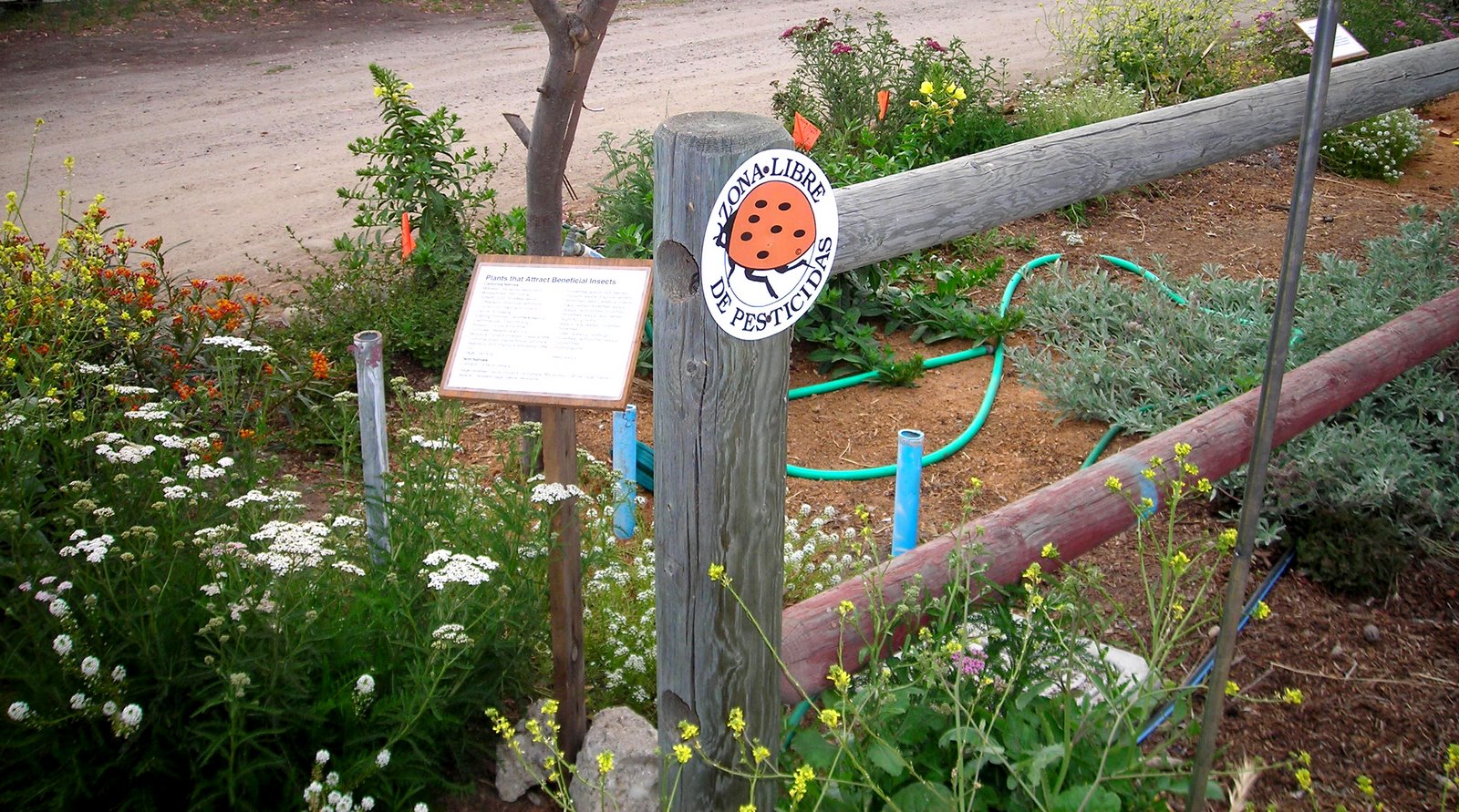
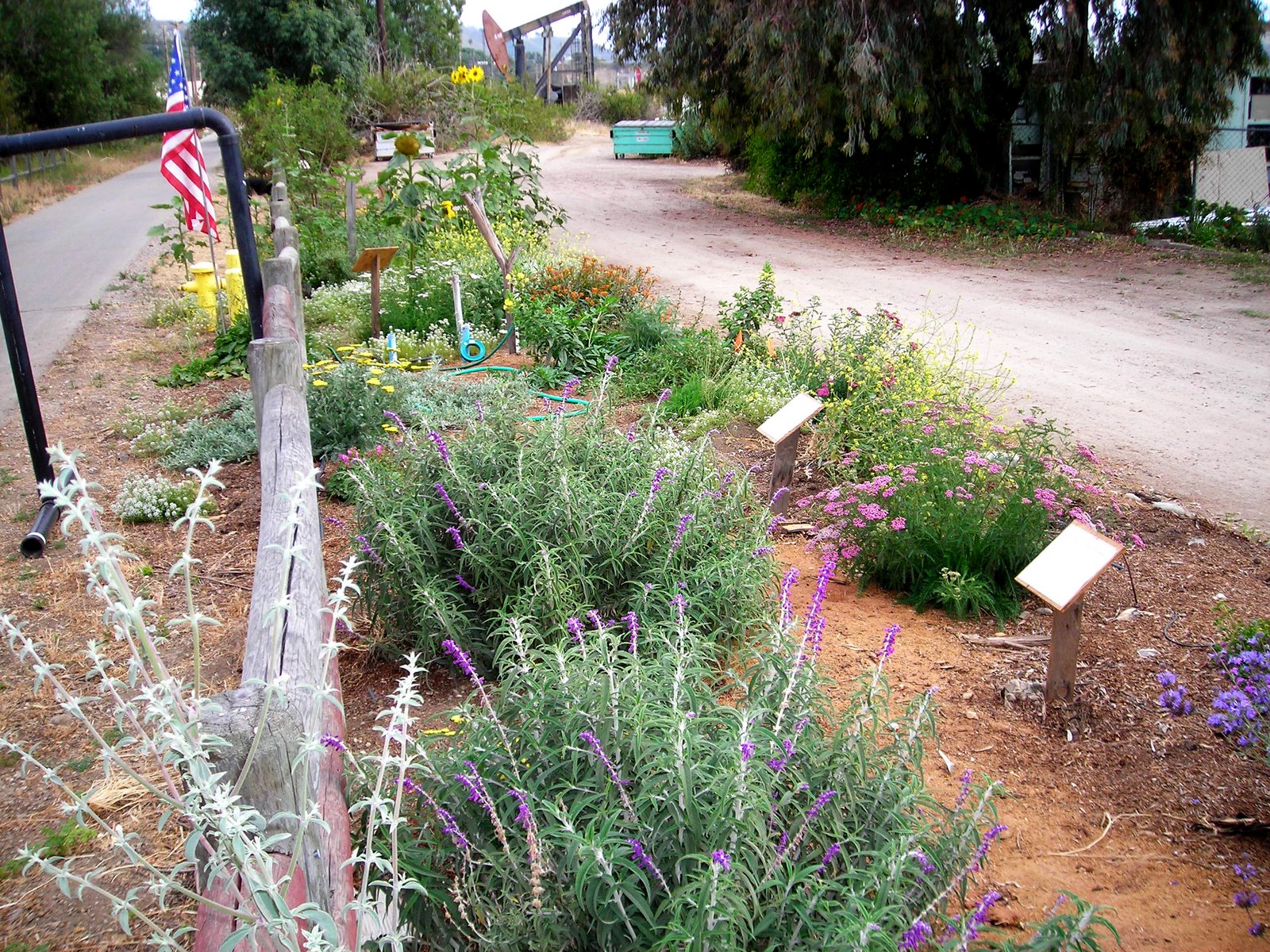
Just in case you’ve missed it, Rincon-Vitova Insectaries of Ventura California has put in a sample Butterfly, Bee and Beneficial Insect Garden (B3 Garden). It is on the west side of the Ventura bike trail right alongside the Ventura River. It’s easy to miss, even when you work at the site like I do.

Obviously, the B3 garden is there to attract butterflies, bees and other beneficial insects. The B3 has drought tolerant plants with an increasing diversity of six-legged visitors, but it should attract you too.


Most of the plants are labeled and there is additional information posted about garden management. During daylight hours, folks are always welcome to take a closer at the garden in order to spot butterflies and beneficial wasps and flies.

Aside from all that, it’s just a nice little stop off the bike trail amongst an array of flowering plants. –end- Dec 08 Duke

An American Tale: Kyra Goes West

Hi, my name is Kyra. I’m from Fort Wayne, Indiana and I’ve been with Rincon-Vitova Insectaries since May 2006. I wound up at Rincon-Vitova rather serendipitously; I was in my last year (last 3 weeks to be exact) of my undergraduate degree, working at the local butcher shop, without any idea of what I was going to do after graduation.

I was taking an Invertebrate Biology course from Dr. James Haddock (awesome professor), with whom I’d already had an entomology course and lab during my freshman year. We were working in the insect chapter, and to be honest I was daydreaming in the back of the room, because what we were covering was a review from his previous course. He started talking about places called insectaries, where people “actually rear insects!” This of course got my attention and I headed straight for the computer lab to Google insectaries during the break.

I found Rincon-Vitova and saw an employment opportunity for an biological control intern. Wouldn’t it figure that the exact day I was viewing this posting was the last day that resumes were being accepted for consideration! I whipped up a cover letter and emailed my resume immediately before I went back to the second half of the lecture. I hadn’t received a reply by the time class let out, but my parents urged me to call the office. I got right through, thanks to the time difference, and ended up talking with Jan for about 45 minutes. The next week, after submitting a writing sample, and having a lengthier phone conversation with Jan and Ron, I was offered the job. That’s when the fun began.

In that span of three weeks, I somehow managed to finish my classes, take my finals, and get my affairs in order such that I’d be ready to pick up and move to California. Graduation day was a blur of excitement; I had divided and packed my things into boxes marked “take to California” and “store in attic,” my Dad crammed as much of my stuff into my car that would fit, and the next morning (well, morning was the plan, it turned out being closer to noon) I was headed west.


Categories

Archives


Design a site like this with WordPress.com
Get started